
A Legacy Built Brick by Brick
By Amanda Wells
“I WENT TO PICK UP WHERE HE LEFT OFF AND JUST STAYED ON. I’M GLAD TO SAY I’VE NEVER REGRETTED IT.”
At 90 years old, Duncan Morgan still fields calls from preservationists around the country asking his advice. A revered master bricklayer, his hands have touched each and every 18th and 19th century building in his hometown of Natchez. “Brick laying is really an artform,” says Duncan. “Working on so many of these historic buildings gave me great pride in preservation. These buildings are irreplaceable.”
A true craftsman and scholar, Duncan says he didn’t set out to be a bricklayer, but perhaps it was in his blood. Both his father Duncan Morgan Sr. and his maternal grandfather William Stephens were sought-after brick layers in Natchez and the surrounding areas. “My grandfather was an apprentice for a brick mason in the 1880s that came to town to work on the Natchez National Cemetery,” says Duncan of his mother’s father. “He eventually went out on his own. My mother’s family and my father’s family were friends and I guess my father followed. My father and three of his brothers all became bricklayers too.”
Duncan began working alongside his father at the age of 12 and brick work continued to be his summer job until he left for college. “My daddy didn’t really want me to go into the trade,” he remembers. “There are just so many factors, mainly the weather.” But fate had other plans. In 1950, Duncan was studying at Xavier University when his father fell from the building while working on The Arcade Theater in Ferriday, Louisiana. He didn’t survive the injuries from the fall. “I went to pick up where he left off and just stayed on,” says Duncan. “And I’m glad to say I’ve never regretted it.”
That attention to detail can be seen in his craft. “When working on buildings like Longwood, when you leave, you want it to look like you were never there,” says Duncan. “We use the same lime mortar and the same sand that was used when these antebellum homes were originally built. The most challenging aspects of my career were, well, all of them. But it was worth it to see the end result and know that building would live on for years.” As Carter Burns, Executive Director of The Historic Natchez Foundation puts it, “Duncan is essentially a brilliant civil engineer. He had to be. He could look at a site, sit down, think about it, and figure out how everything should be laid out, in detail.”
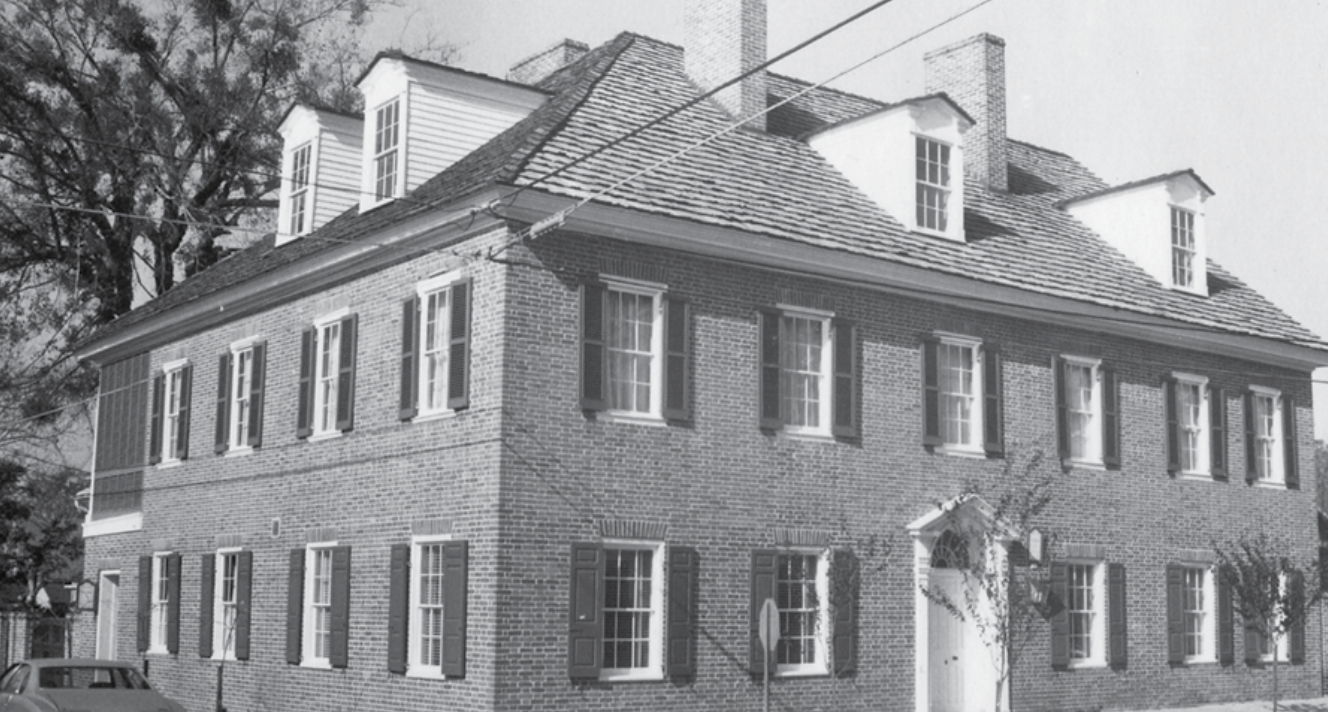
One particularly challenging project was the eight-year restoration of the oldest brick building in Natchez, Texada. When Dr. George and Margaret Moss purchased the c. 1798 building in 1964, it was only fitting that Natchez’s own historian and master mason be brought in. “Texada is one of my favorite projects,” says Duncan. “Through the years, the owners had changed a few times. It had been chopped up into apartments and one owner had put stucco over the original brick. It was a labor of love for the Mosses and a labor of love for me.” “Texada had lived a lot of lives,” explains Carter. “It had been a tavern and was where the state legislature met initially.”
“WORKING ON SO MANY OF THESE HISTORIC BUILDINGS GAVE ME GREAT PRIDE IN PRESERVATION. THESE BUILDINGS ARE IRREPLACEABLE.”
At Texada, Duncan took every single brick, damaged on the front from the wear and tear, and turned them around. Now beautifully restored, Texada is today the private residence of George and Margaret’s daughter, Helen Moss Smith.
The care of historic buildings and the family stories they have to tell serve as the foundation of Duncan’s life. “Up until a fall in November, I’ve lived in the same house next door to where my mother was born,” he says. “And next door to that is the house where my grandfather was born.” Duncan’s humble demeanor is juxtaposed by his obvious breadth of knowledge. “Duncan is a great historian,” says Carter. “He knows the history of every place and everyone, all the families in Natchez. He always remembers and knows every detail intimately.”
“My father always taught me that whatever you do, do your very best,” remembers Duncan. “And that’s what I’ve always tried to do. I learned my craft through interest and dedication and have done the very best I can do. I have no regrets.”