
What is a Freedom House?
By Alison Fast and Chandler Griffin
Blue Magnolia Films
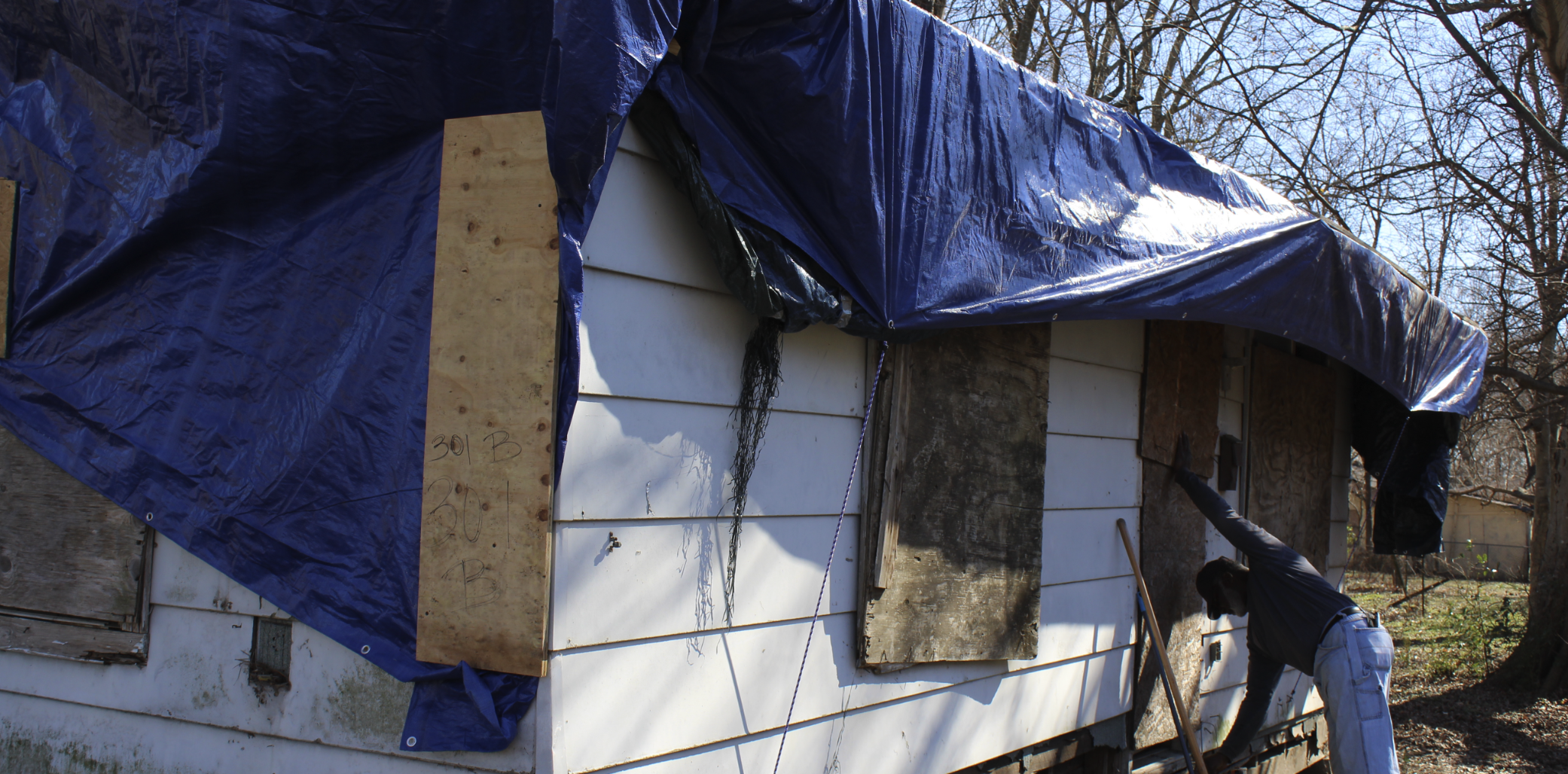
In 2019, the Mississippi Heritage Trust listed Mississippi’s Freedom Houses as one of our state’s 10 Most Endangered Historic Places. Since that time, MHT has been fortunate to secure funding from the Mississippi Delta National Heritage Area Grant Program, National Park Service African American Civil Rights Grant Program and the National Park Service Lower Mississippi Delta Initiative Grant Program to identify, document and stabilize these nationally significant historic places. Working with Blue Magnolia Films, MHT is interviewing the current owners of Freedom Houses as well as activists who came to Mississippi for Freedom Summer and descendants of Civil Rights leaders to capture their memories and learn about their hopes to restore these often-fragile places to tell the story of Mississippi’s fight for social justice.
It is always amazing to us, the power that filmmaking has to spark and preserve memory. It is thrilling to see the light in someone’s eyes as they relive and renew their connection to a place.
At the beginning of each interview we conducted as part of the Mississippi Freedom House Project, there was some dusting off of the intention that brought us together. Why are we here? What is the purpose of this space? In this case, we had the honor and privilege of setting foot on the sacred ground of spaces that were used as meeting places to alter the course of Civil Rights history in Mississippi, places of safety, fellowship, and common struggle.
During our interviews, we witnessed an arc toward reclaiming and reliving both the terror of those years as well as the community values that held everyone together. Resurrecting memories stirred something beyond the personal aspirations of those who now steward these buildings. It brought also up the communal memory of what is means to take a stand for one another, to help one another, and to serve the spirit of a people.
What is at stake when a community loses a Freedom House? Communal aspiration and good will are tangible powers that a determination to survive and ultimately thrive. The practice of looking out for one another was alive and well during the Civil Rights era, when these homes were at the forefront of change. Many interviewees worried about the diminishment of values that were central to the community. They expressed concern that the memory of their elders and what they stood for will not be remembered without a touchstone, such as these houses.
A Freedom House, we learned, is more than just a house. As Dr. Felicia King, owner of the Freedom House in Indianola, noted, a Freedom House “helps to hold the space to preserve the energy that was poured into helping oppressed people” and continues to stand “as a testament to the sacrifices of those brave heroes and sheroes that were the engine of the Civil Rights movement.” As historian Dr. Pat Smith said, "You're not losing a house. You're losing a shrine. You're losing something that evokes memory. And memory is maybe what saves us from our complacency." He and others reminded us that what sustained the Civil Rights movement and made it work were local people who took the initiative and persevered through great difficulty and intimidation.
We often hear about Dr. Martin Luther King, Jr. and other national leaders when we look back on progress made. Through Freedom Houses, we are reminded of the many small communities across Mississippi that were home to leaders who are directly responsibility for the freedoms we enjoy today. As long as the houses endure, their spirit endures. The value of communal memory is that it revives this spirit as inspiration for the next generation to continue the work today.
What is future of Mississippi’s Freedom Houses? It’s clear that the structures must benefit the communities of which they are a part as well as honoring the past. "It’s a heavy lift,” said Judith Roberts, granddaughter of Curtis Conway “C.C.” and Emogene Bryant, after her visit to their family home in McComb. “It brings up deep grief to see the house in its present state. It’s part of who we are, and these structures tell our stories. We are undertaking something bigger than us. We are caretakers of legacy, carrying forward a seed planted by a generation ahead of us. And now we are tasked with continuing it!”
Clearly the work of preserving the Freedom Houses will require patience and sensitivity to translate that arc of heartfelt leadership into action. “For those of us in a similar process,” Roberts suggests, “if there is a way to convene all of us and give us some tools, technical support - and emotional support - to start the preservation process, that would be most useful”.