
Empowering Generations: Unita Blackwell
By: Anne Marie Hanna
If there was one lesson civil rights heroine Unita Zelma Blackwell wanted others to take from her life’s story, it was that ordinary people can do extraordinary things, even if the odds – and the past – are stacked against them. From Lula, Unita was born into a sharecropping family during the Great Depression. She was forced to withdraw from school to help on the farm at the age of 12, a decision that fueled her later calling to fight for educational opportunities for Black youth and women.
"Growing up, Mom only knew hard work, from what she had to do and from watching her elders," said her son, Jeremiah Blackwell Jr. "That work ethic was ingrained in her, and she was determined to pursue an education while putting in the same effort in everything she did."
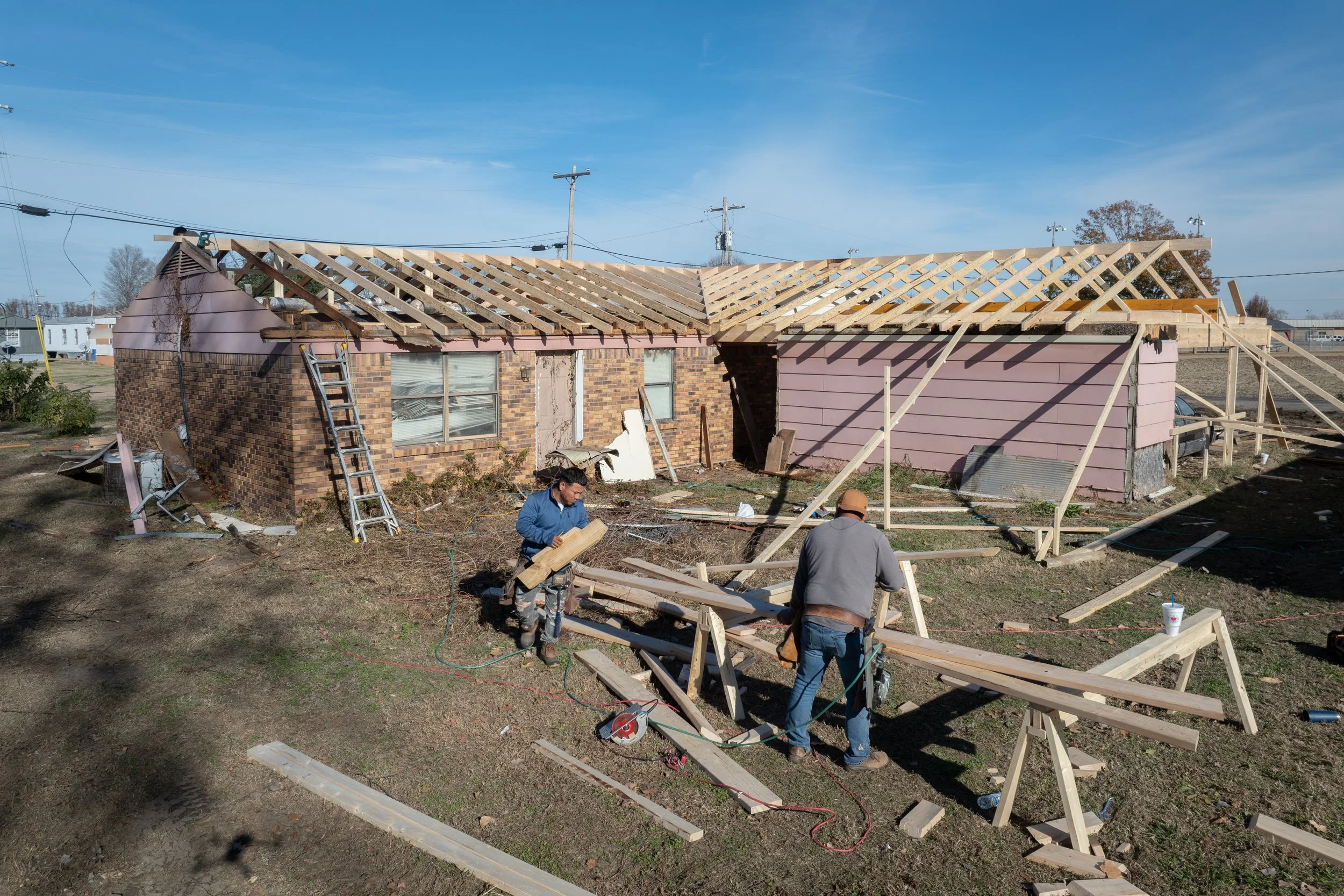
The Blackwells lived in Helena, Arkansas, where Blackwell, Jr. was born, and Florida, before returning to Mississippi to care for Miss Vashti Blackwell, his great-grandmother, in Mayersville. They initially moved into a three-room cabin they inherited from her, which had no running water, before building a modern red brick house on the same property. Unita always kept the shotgun house, saying it reminded her of where she came from. Their home would later become a sanctuary and meeting place for civil rights leaders and student protestors throughout the 1960s.
As the Civil Rights Movement gained momentum, Unita was still picking cotton for $3 a day to support her family. She attended a Student Non-Violent Coordinating Committee (SNCC) meeting at her church, learning about Black voting rights and how to organize a voter registration campaign. The following week, Blackwell and seven others went to the courthouse to take the voter registration test. They were threatened, only two were allowed in, and neither was informed if they passed. She and her husband lost their jobs and were denied welfare after trying to register to vote. SNCC provided the couple $11 every two weeks and neighbors stepped forward to share food to tide them over. Unita testified about her experience to the U.S. Commission on Civil Rights the following year.
"I was always amazed at how strong my mother was in a time when women were expected to be subservient, and yet my father respected her so much," Blackwell, Jr. said. "Respecting women, they both instilled that in me. Most of my family is built on the backs of strong women and matriarchs."
Unita's commitment to civil rights led her to join the SNCC as a field secretary, bringing her into the same circles as activists like Fannie Lou Hamer, who became a lifelong friend and mentor for community organizing and social change. The two helped found the Mississippi Democratic Freedom Party, which aimed to end child labor and promote Black schools teaching math and science. While they failed to unseat the whites-only Democratic Party at the 1964 Democratic National Convention in Atlantic City, it was one of the first opportunities for Black Americans to participate in politics on a national stage.
In 1967, Blackwell co-founded Mississippi Action For Community Education to help small communities incorporate as towns to secure government funding. Unita was elected mayor of Mayersville in 1976, becoming Mississippi's first Black woman mayor, and served for over 20 years. During her tenure, she secured federal grants for essential municipal infrastructure. Inspired by the work of the National Council of Negro Women, Blackwell launched initiatives like the Pig and Garden Campaign, helping rural families gain home ownership, food, and better social services. Her dedication and achievements would earn her a MacArthur Fellowship Genius Grant in 1992. Blackwell chaired the National Conference of Black Mayors (1989-1992) and founded the US-China Peoples Friendship Association, advising six U.S. presidents – Lyndon Johnson, Richard Nixon, Gerald Ford, Jimmy Carter, Ronald Reagan, and Bill Clinton.
"While she first worked for the betterment of life for me and our family, it helped her make connections around the globe and introduce me to a world outside of Mississippi," Blackwell, Jr. said. "Her story shows that as a common person, you can change the world.”
To learn how to support the Unita Blackwell House Project, contact the Mississippi Heritage Trust at preservation@mississippiheritage.com. The National Park Service and the Mississippi Department of Archives and History provided additional information for this article.